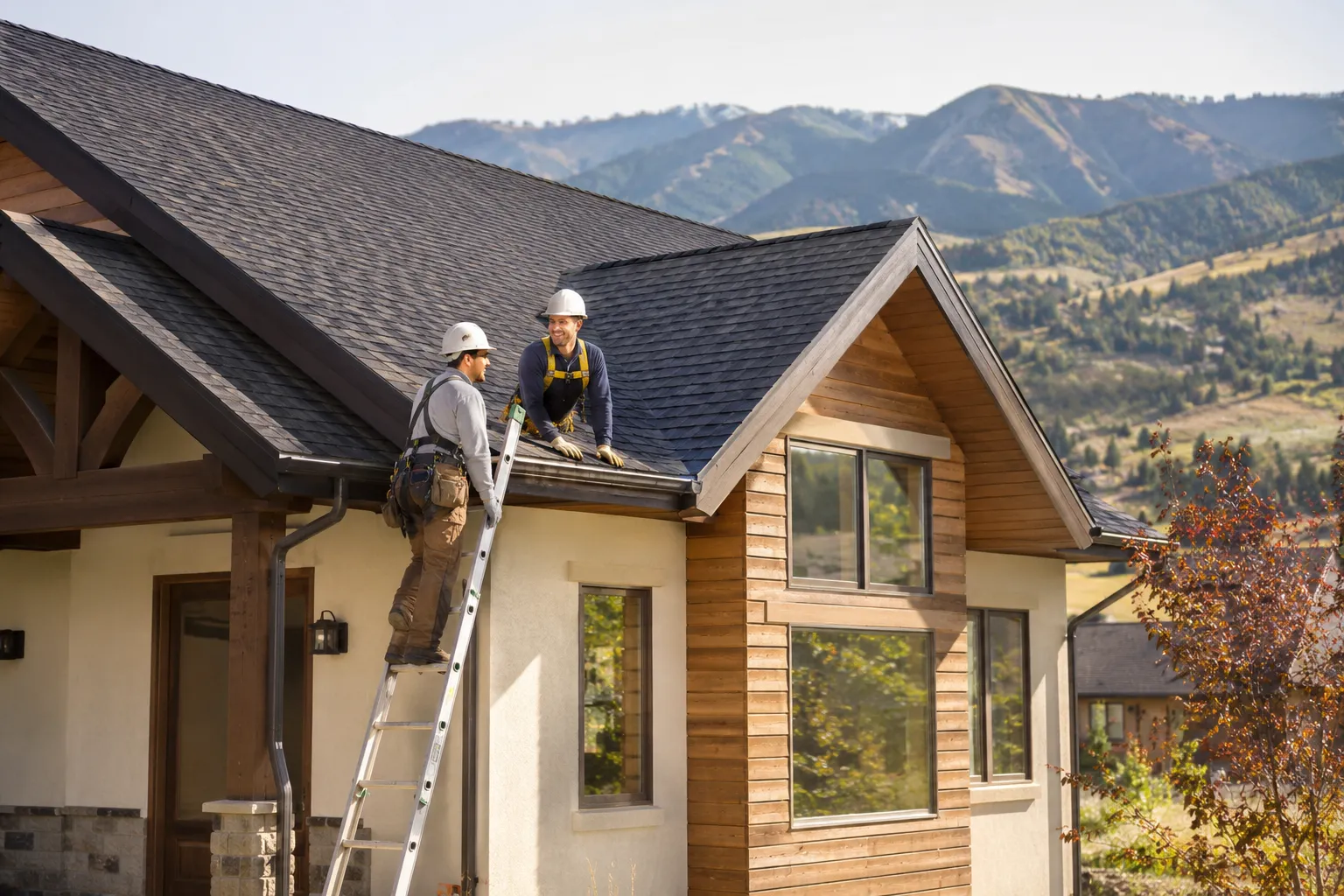
A lot of people think a roof simply wears out on a calendar, so many years and then done. In practice, climate does much of the work. A mountain home in the Longmont area faces thin dry air, strong sun, heavy snow and hail, sometimes all in one year. This guide explains how each one wears a roof, and why planning a new roof here means planning around the weather.
Sun and dry air at altitude
Ultraviolet light is stronger at altitude, and dry air pulls moisture out of roofing materials. Asphalt shingles can dry out, lose their protective granules and curl at the edges. South- and west-facing slopes often show it first. If one side of your roof looks much older than the others, sun exposure is a likely reason.
Signs to look for from the ground:
- Bare patches where granules have worn off
- Edges that curl up or cup
- Granules collecting in gutters or at downspout outlets
- Cracked or brittle-looking sealant around vents
Heavy snow loads
Snow is heavy, and wet snow is heavier. A roof can carry that weight for weeks. Weak spots in the deck or framing may appear as sagging, and fasteners and flashing take extra strain. Snow also piles against chimneys, vents and walls, which is exactly where flashing has to stay sealed.
- Look for sagging lines along the ridge or between rafters
- Watch for ceiling stains that appear after a big snowfall
- Check the eaves for ice buildup that stays for days
Fast spring melt
A quick warm-up can melt snow faster than the roof edge and gutters can handle. Water can back up under shingles, especially where an ice dam has formed at the eave. Cold nights then turn the runoff back to ice. Over several seasons, this cycle loosens sealant and lifts shingle edges.
An ice and water barrier along the eaves helps, and so does balanced attic ventilation and insulation. Both are worth discussing when you compare quotes.
Talk to a provider (720) 804-1527
Hail
Hail can arrive with little warning. It bruises shingles, knocks off granules and dents vents and flashing. Damage is often hard to see from the ground. A bruise may not leak this month, but it can shorten the roof's life. A roofer will look closely at soft spots and at metal parts that show dents.
Impact-rated shingles are made to handle hail better. They cost more up front. For a full replacement, typical ranges are $7,000 to $16,000 for standard asphalt shingles and $9,000 to $20,000 for impact-rated shingles on an average-size home. Your own number depends on the house.
Newer frame homes, basements, wood and stucco
Many homes here are newer frame construction. Tight, well-insulated attics are good for comfort, but if ventilation and insulation are out of balance, heat can leak up and melt snow unevenly, which feeds ice at the eaves. Ask a provider to look at the attic as well as the shingles.
Wood and stucco exteriors add another detail. Leaks often start where a roof meets a wall, and stucco or wood trim can hide moisture for a while. Good flashing at those joints is important.
Basements are common in this region too. Roof runoff that lands beside the foundation can end up where you least want it. When the roof is replaced, check that gutters and downspouts carry water well away from the house.
What this means when planning a new roof
A climate-aware plan is usually a list of specific choices rather than one big one:
- Material suited to snow and sun, such as architectural shingles or metal
- Ice barrier along the eaves and sturdy underlayment
- Flashing details at walls, chimneys and vents
- Ventilation matched to the attic
- A schedule that avoids the heaviest snow and wettest weeks
Season matters for scheduling too. Providers in the Longmont area may be busiest after storms and ahead of winter, so start the conversation earlier than you think you need to.
Replacement or something smaller?
This service is for new roofs and full replacements only. It does not cover small repairs. Call to discuss a new roof or full replacement with an independent provider. When a roof is worn across the board, a replacement is usually clearer than patching, but only an inspection can say.
Talk to a provider (720) 804-1527
More homeowner guides